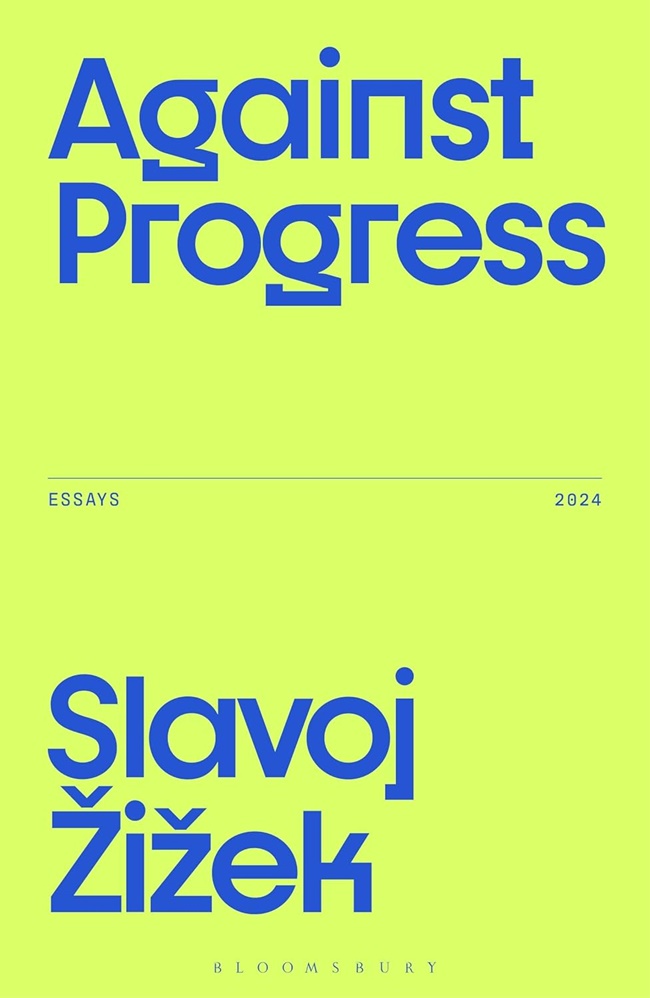
Against Progress
By Slavoj Žižek
To define 'progress' is to lay claim to the future. Seminal thinker Slavoj Žižek turns essayist to interrogate the competing visions which form the horizons of human possibility and ask: Can things, which have never seemed worse, get better? What would a better world be? And how, when we are constantly besieged by doomers, degrowthers and disorienting relativisms can we make any headway at all in the face of unprecedented ecological, social and political crises?
In thirteen iconoclastic essays, Slavoj Žižek disrupts the death-grip that neoliberalists, Trumpian populists, toxic self-improvement industries and accelerationists alike have established on the idea of progress. Anatomizing what is lost when opponents of the future are allowed to define it, Žižek ruthlessly exposes what different visions of progress exclude or sacrifice and the dynamics of desire, denial and disavowal at work in Hollywood blockbusters, Buddhist economics, decolonization movements and other engines of vision. In a whirlwind tour that takes in everything from gentrification to the theory of relativity, Lacan to Lenin, Putin to Mary Poppins and Marine Le Pen to the end of the world, these essays never stop asking hard questions of imagined futures.
Nor does Žižek shrink from the hardest question of all: How do we free ourselves from the hypocritical, guilt-ridden dreaming in which we're enmeshed, and begin to build a better world?
Bahasa: English
Penerbit: gpu
Frequently Asked Questions
What is Against Progress about? expand_more
It is the first volume in Slavoj Žižek's Essays series, collecting thirteen essays that question the assumption that 'Progress' with a capital P is automatically good, examining how the idea is used by neoliberals, populists, and self-improvement culture alike.
Who is this book for? expand_more
Readers interested in contemporary critical theory, politics, and philosophy who enjoy Žižek's provocative, pop-culture-laced style of argument.
Do I need to have read other Žižek books first? expand_more
No. Each essay can be read independently, though familiarity with Lacanian and Marxist ideas helps with some of the denser references.